
Autism & Aging, Part Two: Agency and Equity for Autistic Adults and Seniors
Wednesday, January 14, 2026
Healthy aging partly depends on access to health services; yet autistic individuals often encounter barriers that keep them from getting the care they need. Many of these barriers are the result of a mismatch between health care systems and the needs of the individual. How can practitioners, researchers, and health providers help?
Autistic advocates and experts recommended these 9 strategies for improving access:
Understand the Prevalence of Under-Identification
By some estimates, just one in ten autistic adults over 50 is aware they’re autistic (O’Nions et al., 2023). Their needs, researchers say, are nearly invisible.
Kimberly Armstrong, PhD, R Psych, clinical faculty member of the Neurodevelopmental Disorders Program in the Department of Psychiatry at the University of British Columbia, said some older adults may not have been identified in childhood because practitioners held a more restricted view of autism. These same adults may not be referred later in life because providers can’t see the benefit. Dr. Armstrong shared the case history of one such patient, a woman in her 70s, whom she had recently evaluated.
“Like most people diagnosed with autism later in life, she had accumulated a laundry list of previous mental health diagnoses that she felt did not fit her full presentation and struggles,” Dr. Armstrong said. Identifying her autism gave her “an explanation for her whole life” (United Nations, 2025,1:55:40).
Meet Sensory Needs
Health care visits disrupt stable routines and require people to spend time in facilities where noise, physical touch, smells, and activity can be overwhelming. Some older autistic patients avoid important screenings and procedures because they anticipate an unpleasant sensory experience. Advocates recommend using visual aids and other communication tools to make it easier for people to communicate when they feel overwhelmed.
Interoceptive difficulties—when a person has trouble “reading” their body’s signals—can make it even harder to discuss health issues with providers. Patients with interoceptive difficulties may not be as adept at perceiving pain and identifying its location. When patients have trouble communicating with their providers, the discomfort of unresolved symptoms may lead to worse health outcomes—and to challenging behaviors.
Learn more about interoception.
Simplify Complicated Health Systems
Complex systems impose hardships on autistic individuals and their caregivers. Processes are sometimes so time-consuming that caregivers must leave the workforce to manage a loved one’s care. These bureaucratic barriers also delay the identification and treatment of health conditions. Experts and advocates agree that having to navigate burdensome systems can create its own kind of trauma—and may make people give up before they get the help they need.
“Autistic individuals often experience higher rates of physical and mental health conditions, yet these very individuals face some of the greatest obstacles in accessing competent and compassionate care,” says Christopher Palmer, projects manager for the Commission for the Rights of Persons with Disabilities in Malta. “The obstacles are not rooted in the autistic individuals’ abilities but in systems that were never designed with neurodiverse populations in mind” (United Nations, 2025, 1:40:55).
Palmer concludes, “This is not just a health issue. It’s a human rights issue” (United Nations, 2025, 1:42:51).
The heritability of autism means it’s possible some caregivers are autistic themselves—experiencing many of the same effects as their children, but with their autism unrecognized.
Add Time in the Schedule
To improve health care for autistic individuals, U.N. think tank experts recommend that teams add time to appointments. That extra time serves several important purposes:
- It gives providers time to get to know patients and build trust with caregivers.
- It allows autistic patients time to process information and express their needs.
- It provides a smoother transition between spaces and procedures.
It’s also important to integrate sensory needs and special interests into care plans when possible. Devoting time and resources to these needs is critical when the autistic individual cannot speak or self-advocate.
Integrate Systems of Care
Some providers have instituted system-wide ‘passports’ for autistic patients. These documents are a centralized source of information on primary care and support networks. They also contain information on a patient’s consent and capacity, the kind of support they need to complete activities of daily living, and other information different providers may need.
Think tank participants described a free-flowing system in Norway and Sweden that makes it easier to access information across providers. In Malta, autistic individuals are identified in all health and public systems, so people don’t have to self-advocate from system to system as they age.
In other places, medical record systems now list accommodations and provide disability fields on forms so providers can become familiar with them before appointments.
Provide Advanced Training
Because so many specialists and systems are likely to be involved, participants recommended more training on the needs of autistic individuals across the life span—for specialists in all areas. When health care providers receive training about autism, it’s often about what autism is rather than what to do to improve care for autistic patients.
Providers need more training in these areas:
- Screening for common co-occurring conditions
- Predictors of quality of life in autistic individuals
- Effects of poverty on autistic individuals and their care
- Availability of diagnostic services for older adults
- The needs of autistic health care providers
Think tank participants noted that social workers should be trained in the navigation of systems to relieve caregivers and parents from that workload, so they can spend more of their time in family support.
Another recommendation is for autism organizations and health care providers to be trained to collaborate on design practices that reduce barriers and improve integrative, supportive care.
Build on Existing Research
Participants in the think tank said there’s a need for more data collection moving forward. To better understand the hospital experience for autistic patients, providers should record these data points:
- Length of stay
- Re-admission
- In-patient safety events
Participants also encouraged more longitudinal studies to understand changing needs and supports across the life span. Because so many child cohorts have been studied, baseline data is available, and longitudinal research would be well-grounded.
In addition to health concerns, older adults may face legal and financial challenges that impinge on their autonomy, place their income or financial security at risk, and reduce their quality of life.
These issues can arise when others presume that needing support indicates a lack of capacity to make decisions. That perspective jeopardizes basic human rights protected by treaties such as the United Nations Convention on the Rights of Persons with Disabilities (UNCRPD).
“Rather than actually offering support to a person, we are saying, ‘Okay, you are not good enough. We cannot trust you. We are presuming incompetence,’” said Alistair de Gaetano, PhD, attorney, and autistic advocate with the Autism Advocacy Council in Malta (United Nations, 2025, 2:14:50).
When conservatorship or guardianship is implemented, others make health, financial, and legal decisions on behalf of an autistic individual, managing their daily affairs in ways that may make their lives more difficult. Instead, de Gaetano said, “Let’s go from substituted decision-making to supported decision-making” (United Nations, 2025, 2:16:26).
Assistive technology and personal assistants are two ways to support the agency of autistic adults dealing with administrative barriers. If age has affected someone’s communication abilities, looking at their life patterns may provide insight into decisions they would make.
“This is another human being. Look at their rights, will, and preferences,” de Gaetano urged. “Being autistic does not mean we’re broken or less, whatever the age. Let’s work with a person to be able to make sure this person can still participate in society in the fullest way possible” (United Nations, 2025, 2:17:13).
Develop Supportive Communities
People in neurodivergent communities share similar experiences with those in LGBTQ+ communities. Laura Graham Holmes, PhD is an associate professor in the City University of New York’s Silberman School of Social Work. She explained, “We know that there is a high degree of overlap between sexual orientation and gender diversity and neurodiversity. Both autistic people and LGBTQ people have a heightened rate of adverse experiences like abuse, bullying, and relatedly, mental and physical health conditions” (United Nations, 2025, 2:26:03).
The two groups also share these challenges:
- Minority stress, which happens when people are treated differently from those in the cultural mainstream
- The need for masking to avoid or cope with conflict
- The question of where and when to disclose identities
- The fear that health care will not be provided in an affirming way
The effects of these stressors can be lessened by creating communities that foster a sense of belonging. “Do you have a place you can go in your life where you can authentically be yourself, and you know that people will have your back?” Dr. Graham Holmes asked. (United Nations, 2025, 2:29:21).
“Both the LGBT community and the autism community have had to find ways to thrive in systems not built for them,” she said. “One of the most powerful lessons from the LGBTQ+ aging is how people are often out of touch with their biological families, so they create chosen families. They create mutual care networks and affirming spaces when traditional supports aren’t as reliable. Autistic folks face the same challenges as they get older—how to build support structures that don’t depend on the systems that have historically misunderstood them” (United Nations, 2025, 2:30:16).
As autistic people age, it’s critical to stay visible, to provide mentorships, and to find places to contribute. She concluded, “Aging is not about decline; it’s also about continuity of identity” (United Nations, 2025, 2:31:20).
Explore:
Blog
Autism & Aging, Part One: What Global Experts Want Us to Know About Autistic Adults and Seniors
Global experts and autistic advocates examine what happens when autism and aging intersect—highlighting overlooked health risks, care gaps, and the urgent need for systems that support autistic adults and seniors across the lifespan.
Read Part One >
Guide
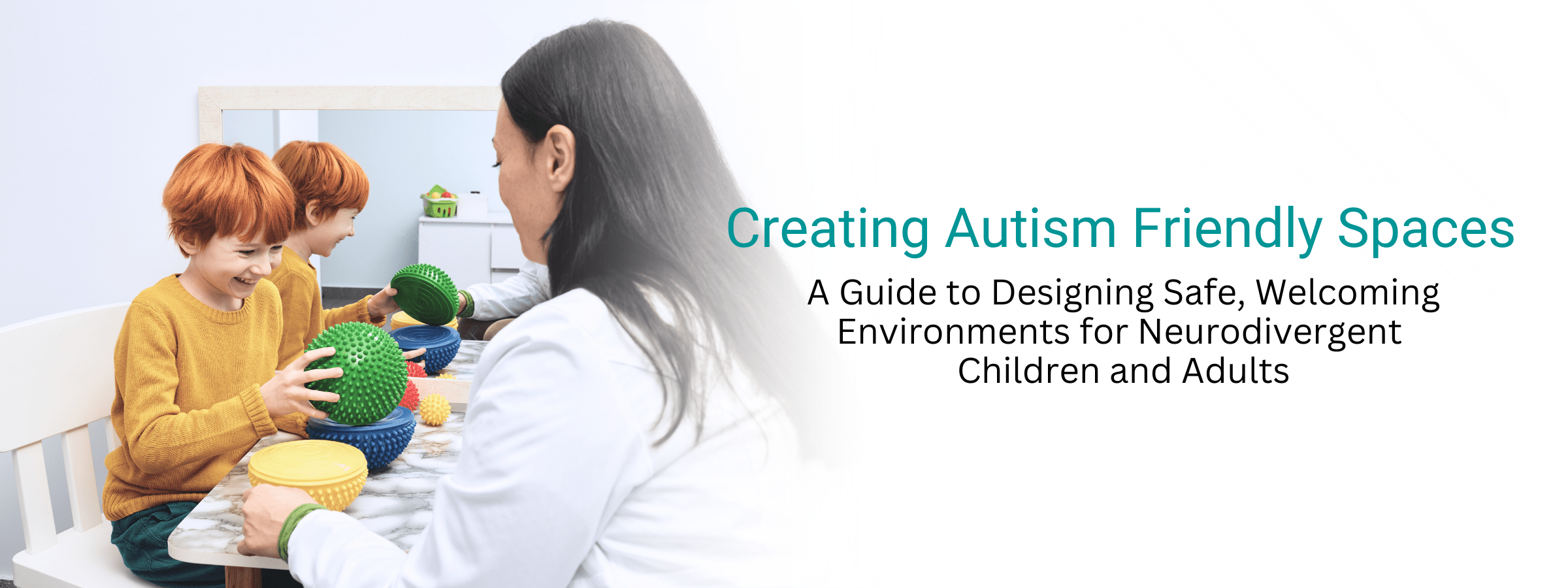
Creating Autism Friendly Spaces
Learn how to create autism-friendly spaces with this practical, evidence-based guide, offering actionable strategies to reduce sensory barriers and support autistic individuals in clinical, educational, and community environments.
View Guide >

ProLearn® On-Demand Webinar
Delivering Multicultural and Neuro-Informed Assessments: Conversations with Dr. Linda McGhee and Dr. Marilyn Monteiro
Explore actionable, culturally responsive assessment strategies and a neuro-affirming framework from expert psychologists Dr. Linda McGhee and Dr. Marilyn Monteiro to improve your multicultural and neuro-informed evaluation practices.
Learn More >
Research and Resources:
O'Nions, E., McKechnie, D. G., Long, C., Mandy, W., & Stott, J. (2023). How can autistic adults be supported in primary care? The British Journal of General Practice, 73(736), 518–521. https://doi.org/10.3399/bjgp23X735525
United Nations (2025, October). Aging and autism: Think tank discussion of relevant topics [Video]. Department of Global Communications. https://webtv.un.org/en/asset/k1s/k1savl373v